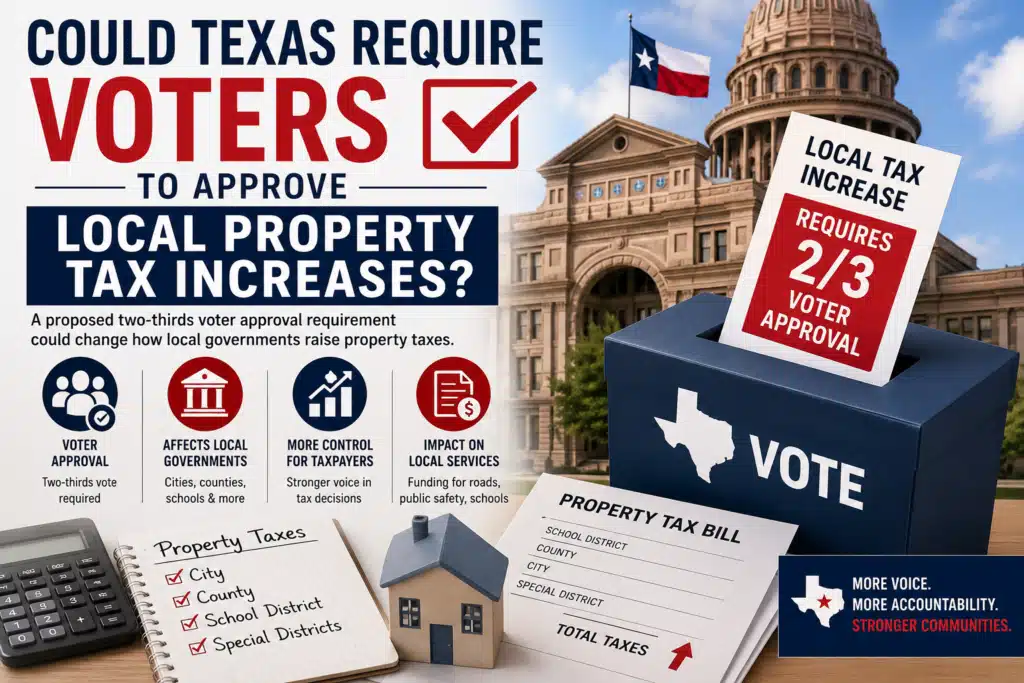
Texas leaders are considering proposals that could give voters a bigger role in approving certain local property tax increases. One proposal calls for a two-thirds voter approval requirement before local governments could make certain tax increases.
If adopted, the change could make it harder for cities and other taxing units to raise property tax revenue without direct voter support.
But how would it work and what could it mean for homeowners?
What Is the Two-Thirds Proposal?
The basic idea is straightforward:
If a local government wants to increase property tax revenue beyond certain limits, voters would have to approve the increase by a two-thirds majority.
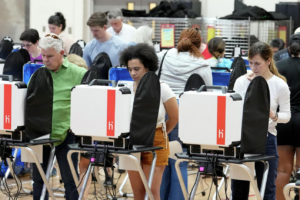
In other words, instead of a local taxing unit being able to make certain increases through the existing process, taxpayers could have a more direct say through an election.
The exact details would depend on the legislation ultimately introduced and passed.
Why Is This Being Proposed?
Supporters of the idea argue that property taxpayers should have a stronger voice when local governments want to increase tax revenue.
The argument is essentially:
If taxpayers are going to pay more, taxpayers should have a direct say.
This comes as Texas continues to debate property tax relief, local government spending, and the rising cost of providing public services.
Which Local Governments Could Be Affected?
The proposal could potentially affect different types of local taxing units, depending on how lawmakers write the legislation.
These can include:
🏙️ Cities
🏛️ Counties
🏫 School districts
🚒 Special taxing districts
However, homeowners should not assume that the same rules would apply to every taxing unit.
The final legislation would determine which entities and tax increases are covered.
How Could It Affect Cities?
Cities collect property taxes to help pay for services such as:
- Police and fire protection
- Roads and infrastructure
- Parks
- Public facilities
- Other local services
If a two-thirds voter approval requirement applied to certain city tax increases, city officials could have less flexibility to increase property tax revenue without voter approval.
That could put more pressure on cities to explain why an increase is needed and how the money would be spent.
What About Counties?
Counties could face similar restrictions if they are included in the final proposal.
Counties help fund services such as:
- Roads
- Law enforcement
- Courts
- Emergency services
- Other county operations
A higher voter-approval threshold could make significant revenue increases more difficult without taxpayer support.
Could This Affect School Districts?
This is one of the biggest questions.
Texas school districts rely on a combination of local property taxes and state funding.
If the proposal applies to school districts or affects their ability to raise local revenue, lawmakers would also need to consider how schools would make up any funding difference.
That’s why property tax reform and school finance are closely connected.
Would This Automatically Lower Your Property Tax Bill?
No.
Even if voters receive more control over certain tax increases, your property tax bill could still change for other reasons.
Your bill depends on factors including:
- Your property’s taxable value
- Your exemptions
- Tax rates from different taxing entities
- New property improvements
- Local tax decisions
So voter approval of a particular increase would not necessarily determine your entire property tax bill.
What Happens If Voters Say No?
If a covered tax increase requires voter approval and voters reject it, the taxing unit would not be able to implement that increase under the proposed rules.
That could force local officials to consider other options, such as:
- Reducing spending
- Adjusting budgets
- Finding other sources of revenue
- Delaying projects
- Reconsidering the proposed tax increase
This is where the debate becomes more complicated.
Lower taxes can provide relief to homeowners, but local governments still have to pay for services.
Could This Change How Local Governments Make Decisions?
Potentially.
A two-thirds approval requirement would raise the threshold for certain tax increases and could make local officials more cautious about proposing them.
It could also lead to more public discussion about:
“How much should local government spend, and how much should taxpayers pay?”
That conversation could become an important part of Texas property tax policy going forward.
What Homeowners Should Watch
If this proposal moves forward, homeowners should pay attention to:
✔ Which taxing units are covered
✔ Which tax increases would require voter approval
✔ Whether the two-thirds threshold applies to all or only certain increases
✔ How elections would be conducted
✔ What happens when voters reject an increase
✔ How school funding would be affected
✔ Whether other property tax limits would change
Most importantly, remember that a proposal is not the same as a law.
The details can change significantly as legislation moves through the Texas Legislature.
The Bottom Line
A two-thirds voter approval requirement could give Texas homeowners more direct control over certain local property tax increases.
But it could also create challenges for cities, counties, school districts, and other taxing units that rely on property tax revenue to fund services.
The real question isn’t simply “Will taxes go down?”
It’s:
“Who gets to decide when local property tax revenue should increase and what happens if voters say no?”
That’s something Texas homeowners will want to watch closely.