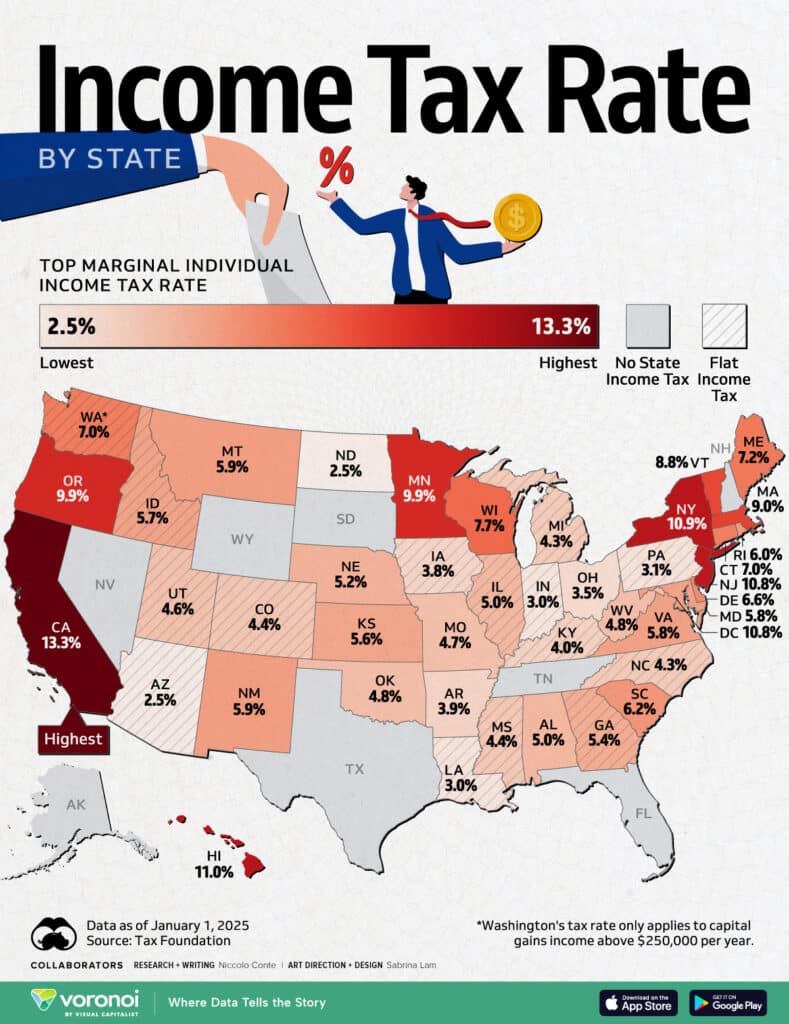
Texas is known for having no state income tax a feature many residents and businesses appreciate. But this financial model comes with trade-offs. To make up for lost revenue, Texas relies more heavily on property taxes than most states. The Texas property tax structure has significant consequences for homeowners, investors, and even renters. Let’s break down how this tax structure works, why it leads to higher local tax bills, and what kinds of reforms are on the table in 2025.
Why Texas Doesn’t Have a State Income Tax
Texas is one of only nine U.S. states without an income tax. Instead of collecting revenue from personal income, the state funds its budget through sales taxes, franchise taxes, and property taxes. This Texas property tax structure is designed to keep the tax burden lower for individuals who earn more, but it shifts the pressure to other revenue streams.
The Role of Property Taxes in Texas Revenue
Because there’s no income tax, local governments in Texas including school districts, cities, and counties rely heavily on property taxes to pay for essential services like:
- Public education
- Infrastructure (roads, water, etc.)
- Police and fire departments
- Local government salaries and operations
In fact, Texas consistently ranks in the top 10 for highest effective property tax rates in the country. This reliance puts pressure on local appraisal districts to assess property at high values, which increases tax bills for residents and commercial property owners alike under the current Texas property tax structure.
Why Homeowners Feel the Pinch
Without an income tax to balance things out, Texas homeowners often feel like they’re carrying more than their fair share of the tax load due to the Texas property tax structure. Every year, appraisal districts evaluate properties and send updated value notices. If your home or commercial property increases in value even if you haven’t made improvements your tax bill likely goes up.
Even with homestead exemptions or 10% caps on annual appraisal growth, many Texans experience steady tax hikes due to rising real estate values and local budget demands.
The Impact on Renters and Businesses
Property owners aren’t the only ones affected. Landlords often pass rising property tax costs on to renters. Businesses, especially those with large footprints like warehouses or retail centers, also bear the brunt of the high tax burden, which can affect job growth and economic development.
Reforms Under Discussion in 2025
In recent years, lawmakers and advocacy groups have called for reforms to bring relief to taxpayers without introducing an income tax. Some ideas under consideration in 2025 include:
- School funding reform to reduce reliance on local property taxes
- Revenue caps that limit how much local governments can increase spending
- Transparency laws that require local taxing entities to notify residents of proposed increases
- Appraisal reform to standardize how property is valued
- Increased exemptions, particularly for seniors, veterans, and low-income homeowners
These reforms aim to rebalance the state’s tax system while preserving Texas’ appeal as an income-tax-free state.
What This Means for You
If you’re a property owner in Texas, it’s important to stay informed and proactive:
- Review your annual appraisal notice carefully
- File a protest if you believe your property has been overvalued
- Work with professionals like TexasPVP to navigate the protest process and reduce your tax burden
- Pay attention to local elections and tax hearings, as local policies directly impact your property taxes
Bottom Line
Texas’ no-income-tax model might save you money on your paycheck, but it can cost you more in property taxes especially if your property’s value continues to rise. Understanding the connection between state policy and your local tax bill is the first step toward protecting your finances in the Texas property tax structure.