Introduction
During his December campaign push, Governor Greg Abbott introduced a major new policy idea: a 3% cap on annual property value increases for all Texas homes.
This would represent one of the largest structural changes to the state’s appraisal and tax system directly affecting homeowners, renters, and local governments.
The governor argues that Texans need predictable, stable tax bills, especially as market values keep rising faster than incomes. But appraisal caps also raise questions about funding, fairness, and how local governments would respond.
Here’s a clear breakdown of the proposal and what it could mean for property owners.
What Abbott Is Proposing for 2026
1. A 3% Appraisal Cap for All Texas Homes
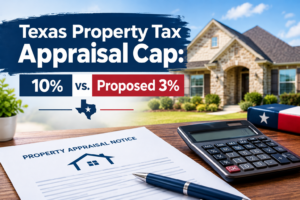
Currently, Texas caps appraisal increases at 10% per year but only for homesteads.
Abbott’s plan would:
- Reduce the limit from 10% to 3%
- Apply it to all homes, including rentals, second homes, and investment properties
- Prevent major jumps in taxable value during hot market cycles
This would sharply slow how fast taxable values grow.
2. Voter Approval for Certain Tax Rate Increases
The plan also includes more direct voter control. Under Abbott’s proposal:
- Cities, counties, and school districts would need voter approval before raising tax rates beyond a set limit.
- The idea is to give Texans a stronger say in year-to-year tax changes not just values.
This adds another layer of protection to keep tax bills predictable.
3. Indirect Benefits for Renters
Renters do not receive appraisal caps directly, but Abbott’s plan emphasizes second-hand benefits, including:
- Slower property tax growth for landlords
- More stable operating costs
- Reduced pressure to raise rent each year
TexasPVP notes that while renters could benefit, the impact depends on whether landlords pass savings down.
How the 3% Cap Could Help Homeowners
If implemented, the cap could create significant advantages:
- More predictable tax bills
- Protection from market spikes caused by rapid sales prices
- Long-term affordability for homeowners on fixed incomes
- Greater stability for new buyers, especially in fast-growing suburbs
For many households, this could prevent unexpected annual tax jumps.
Potential Challenges and Questions Ahead
Despite the appeal, large appraisal caps come with trade-offs.
1. Lower Local Government Revenue
Slowed value growth means cities, counties, and school districts collect less revenue, unless voters approve rate increases.
2. Pressure on Local Services
Reduced funding may affect:
- Emergency services
- Road maintenance
- School district budgets
3. Equity Concerns
Caps can create wide value gaps between older homes and newly purchased homes.
New buyers often end up paying more than long-term owners for similar properties.
4. Legislative Approval Required
Appraisal caps require approval from:
- The Texas Legislature
- Texas voters (constitutional amendment)
The debate will likely be intense in the 2025 session.
What Homeowners Should Watch in 2025
To know whether the proposal is gaining traction, homeowners should watch:
- Bills filed in the 2025 session on appraisal caps
- Testimony from appraisal districts and school districts
- State budget projections, since caps slow revenue growth
- Legislative interest in additional compression
- Constitutional amendment proposals coming out of committees
These signals will show how close the plan is to becoming reality.
Conclusion
Abbott’s 3% appraisal cap proposal has the potential to reshape Texas property taxes for the next decade. By limiting how fast values can grow and giving voters more control over rate hikes, the plan aims to provide stronger, long-term protection for homeowners and indirect relief for renters.
But the policy comes with significant financial considerations. As 2026 approaches, Texans should follow the discussions closely to understand how this proposal could change their next property tax bill.
TexasPVP will continue breaking down every major tax reform proposal so homeowners stay informed, prepared, and empowered.