
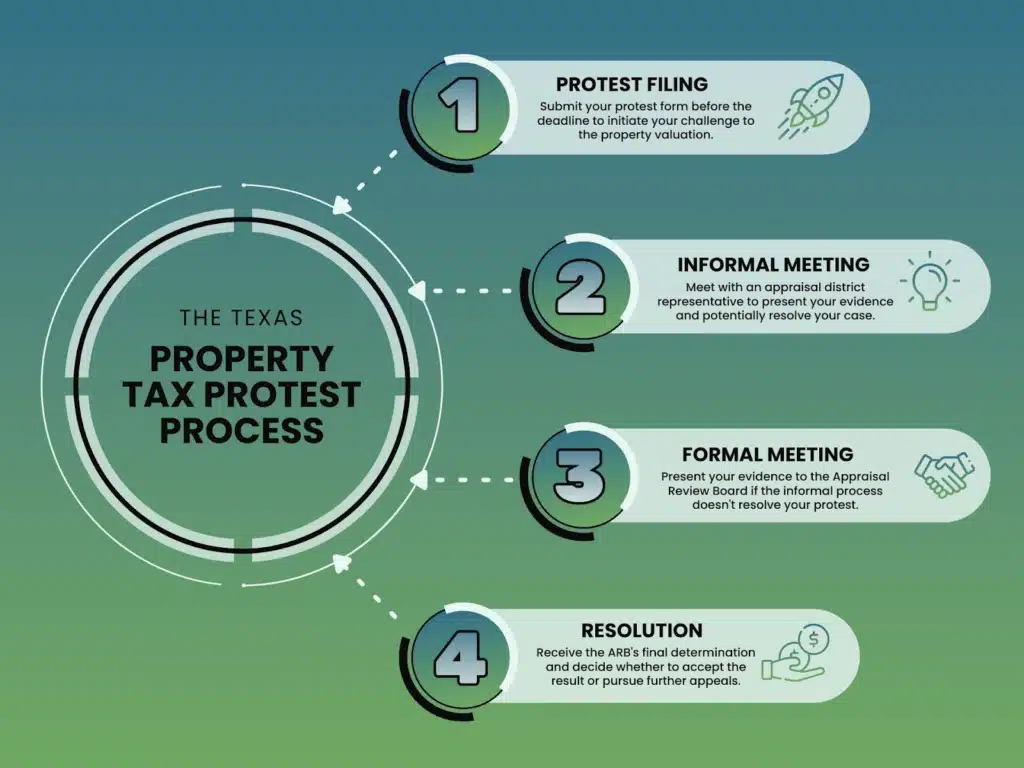
If you’ve already filed your property tax protest, you’ve taken an important first step, but the process doesn’t stop there.
Many Texas homeowners aren’t sure what comes next, and missing the next steps can affect the outcome of your case. Understanding what to do after filing your property tax protest helps you stay prepared and confident.
Step 1: Start Preparing Your Evidence
After filing, your focus should shift to building a strong case.
Helpful evidence may include:
- Comparable property sales (comps)
- Photos showing your property’s condition
- Repair estimates
The stronger your evidence, the better your chances of reaching a fair value.
Step 2: Watch for Updates and Notices
Once your protest is filed, you may receive communication about:
- Informal meetings
- Evidence submission instructions
- Hearing dates
Stay alert and check your email regularly so you don’t miss important updates.
Step 3: Be Ready for an Informal Review
In many cases, you’ll have the opportunity for an informal review before a formal hearing.
This is your chance to:
- Present your evidence
- Discuss your property value
- Possibly resolve your case early
Step 4: Prepare for a Hearing (If Needed)
If no agreement is reached, your case may move to an ARB hearing.
At this stage, you should:
- Organize your evidence clearly
- Have a simple explanation of your value
- Be ready to present your case
Preparation is key to making a strong impression.
Step 5: Know You Can Still Get Help
Even if you’ve already filed your protest yourself, you don’t have to handle everything alone.
You can still:
- Get help reviewing your case
- Strengthen your evidence
- Have someone represent you at the hearing
Conclusion
Filing your property tax protest is just the beginning. Taking the right steps afterward can make a real difference in your outcome.
Staying informed and prepared helps you stay in control.
👉 Learn more: www.texaspvp.com